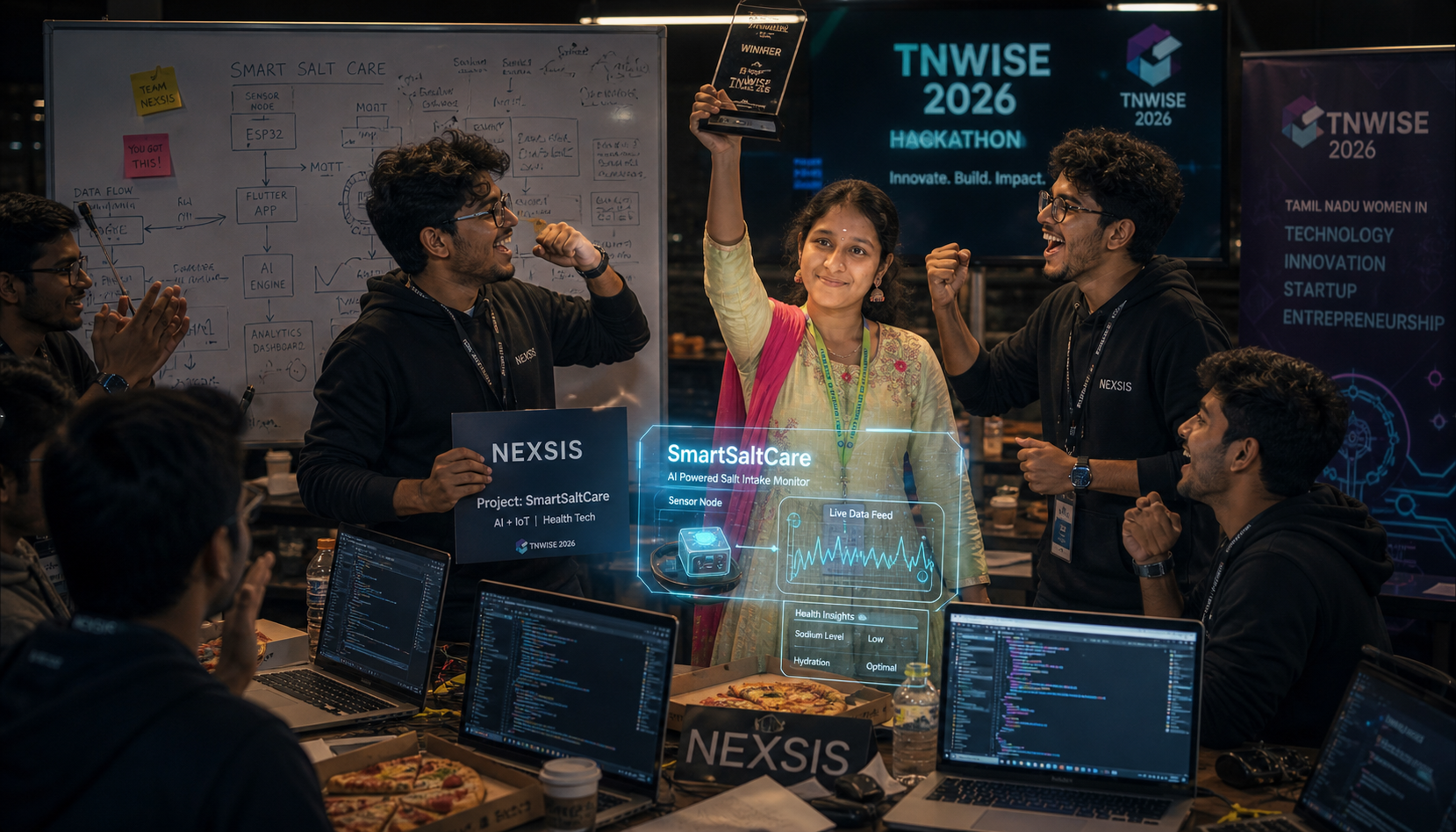
If you’ve ever been to a hackathon, you know the vibe.
Cold pizza.
3 AM debugging sessions.
Someone yelling “it works on my machine.”
And a team somewhere trying to finish their demo five minutes before judging.
Hackathons are chaotic, messy, and weirdly magical at the same time.
I’ve been participating in a lot of hackathons, tech expos, and innovation events recently. And one thing I realized is this:
Hackathons aren’t really about winning.
They’re about what happens after the win.
Recently, I watched something interesting happen with a senior friend of mine.
And honestly, it felt like watching the beginning of a startup documentary.
The Moment When the Hard Work Pays Off
This friend of mine is one year senior to me in engineering. She’s one of those people who takes hackathons seriously.
Not “submit whatever and hope for the best” seriously.
I mean grinding mode activated.
Late nights.
Constant improvements.
Refactoring ideas again and again.
You could literally see the effort.
Then one day the results dropped.
She won.
And not just a small prize.
She secured ₹1 lakh in a hackathon.
Now if you’ve ever watched someone work insanely hard on something, you know that feeling when they finally win.
It hits differently.
It’s not about the money.
It’s about knowing the amount of sweat, stress, and sleep deprivation that went into that moment.
The Real Chaos Begins After the Win
Here’s the funny part.
Winning the hackathon was actually the easy part.
The real chaos started afterwards.
Suddenly everyone had advice.
The principal had suggestions.
The HOD had suggestions.
Startup incubators had suggestions.
Tech friends had suggestions.
The suggestions looked something like this:
- File a patent immediately
- Turn it into a startup
- Join an incubator
- Build an MVP and scale
- Apply for innovation grants
Basically the entire tech ecosystem suddenly wakes up and goes:
“Okay now what are you going to do with this idea?”
Enter IEEE EPICS
While all this was happening, she got a message about IEEE EPICS.
For those who don’t know, EPICS is a program where engineering students build solutions that actually solve real community problems.
Not just flashy demo projects.
Real impact.
That caught her attention immediately.
Because her goal was never just to win hackathons.
She told me something that stuck in my mind:
The day I joined engineering, my goal was to build something that helps people and makes the world a little better.
And her idea is focused on something that most tech people ignore.
Rural communities.
Places where technology should help the most but often doesn’t reach.
The Plan: Not a Startup (Yet)
Most people jump straight into startup mode after a hackathon win.
Pitch deck.
LinkedIn announcements.
Startup founder bio activated.
But her plan is different.
Instead of rushing into a startup, she wants to:
- Apply for funding through programs like IEEE EPICS or other innovation grants
- Use the funding to properly build the product
- Deploy the solution in rural areas where it can actually help people
- Eventually collaborate with government systems for large-scale adoption
The long-term idea is interesting.
If the government adopts the system, the creators could receive revenue sharing, funding support, or equity-style compensation depending on how the collaboration works.
In other words, build something useful first.
Monetization later.
A rare mindset in the age of “launch first, figure out the problem later.”
A Hacker Community Warning About Patents
During one of our conversations, I mentioned something I heard from a cybersecurity community member from DEFCON circles.
A small but important warning.
Sometimes when students file patents through their college, the institution may include its name as a co-owner of the patent.
That means the intellectual property might not fully belong to the student inventor.
For many students, this becomes a surprise later.
So if you’re building something serious, it’s worth understanding:
- Who owns the patent
- What rights the college has
- Whether you’re signing away ownership
Legal details may sound boring, but they can shape the entire future of an innovation.
Hackers know this rule well:
Always read the terms before executing the command.
Watching This Made Me Think
Watching a friend go through this stage is interesting.
An idea moves from:
Hackathon project → Potential real-world solution.
And suddenly the decisions become bigger.
Questions start appearing:
- Should you build a startup?
- Should you open-source it?
- Should you work with government programs?
- Should you join an incubator?
Every path leads to a completely different future.
So I told her something simple.
Think carefully.
Because the decision you make at this stage might shape your entire career.
Why Hackathons Actually Matter
People often underestimate hackathons.
They think it’s just students building random prototypes for prizes.
But sometimes hackathons become the starting point of real innovation.
The ₹1 lakh prize might just be the beginning.
If things go right, the real impact might be thousands of people in rural communities benefiting from a solution that started as a hackathon idea.
And that’s when you realize something.
Hackathons aren’t competitions.
They’re launchpads.